

Shepadoodle Basics
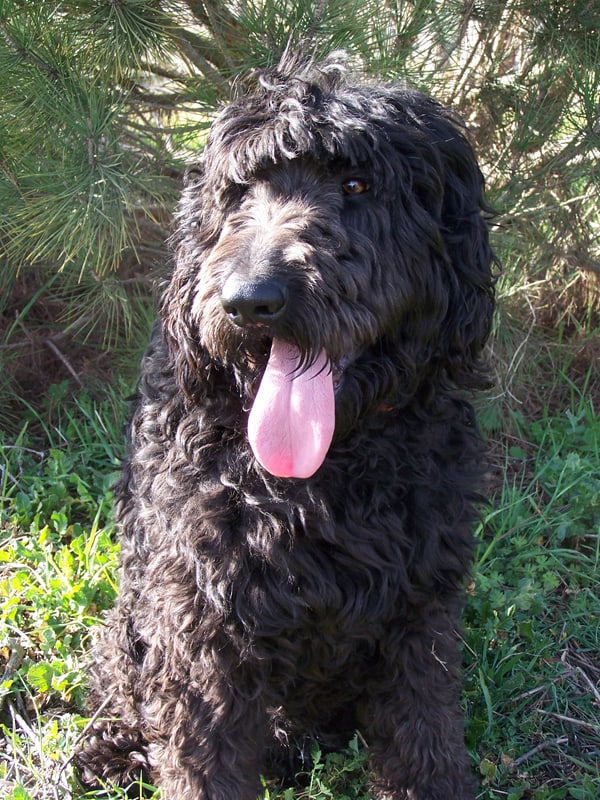
This beautiful dog is a hybrid of two highly intelligent breeds – the German Shepherd and the Standard Poodle – making him inherently bright, easily trainable, and eager to please. The Shepadoodle is great with children, and these charming, self-confident animals are known to become extremely loyal to their families. Because they are an alert breed it can take a while for them to warm to strangers but this makes them terrific watch/guard dogs. This is also a strong, energetic animal who requires daily exercise and can be prone to obesity and boredom when this doesn’t happen.
The Shepadoodle is inherently bright, easily trainable, and eager to please.
Origin
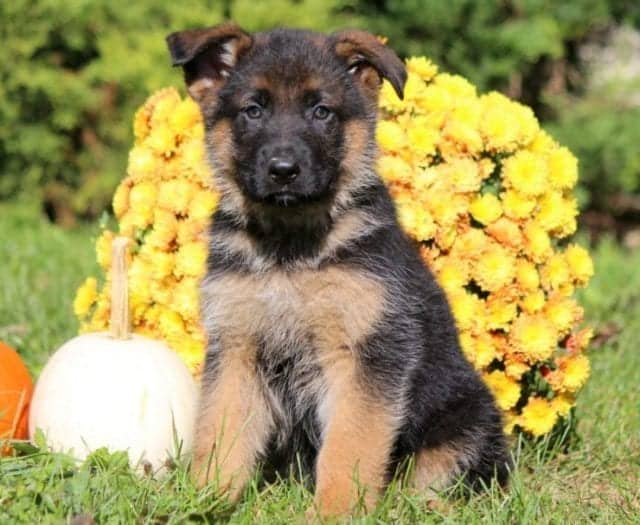
Shepadoodles originated in the U.S., as the US Army developed this breed in the 1960s as a military police dog. Because they come from two working breed dogs, they have an energetic disposition and need for regular and rigorous exercise. Poodles were originally bred in Germany as a water-dog for hunting waterfowl while Shepherds were intended to herd sheep.
Shepadoodles are a designer dog that has been bred to incorporate the intelligence of the German Shepherd with the non-shedding (and intelligence) of a Standard Poodle. As with many hybrid dogs, lineage may be skewed if one or both of the parents is not a purebred, but in fact another Shepadoodle. In this instance, you would have a mixed breed dog versus a designer dog.
Food/Diet
While it’s best to keep your young pup on whatever dry food the breeder has started him on, you can slowly wean him over to your preferred dog food. An inherent trait from both breeds is slight gastric sensitivity and choosing a quality food is important. As an adult, your Shepadoodle should be fed 3-4 cups of top quality dry dog food daily. These dogs don’t over-consume and stay lean. This fact, combined with exercise, will contribute to their healthy life span.
This hybrid was designed for service – the Shepadoodle responds extremely well to training and have uncanny natural instincts.
Training
This hybrid was designed for service – the Shepadoodle responds extremely well to training and has uncanny natural instincts. Because his lineage includes two very bright breeds, the Shepadoodle is a quick study and easy to train. They are a very active dog and respond well to a devoted and dominant pack leader, so it is recommended that training, socialization, and discipline be introduced at a young age. It is also recommended that owners who are not familiar with training a larger dog defer to the experts and bring in a seasoned trainer to introduce the concept of dominance and discourage destructive behaviors early on. These dogs do exceptionally well in obedience and agility training.
Weight
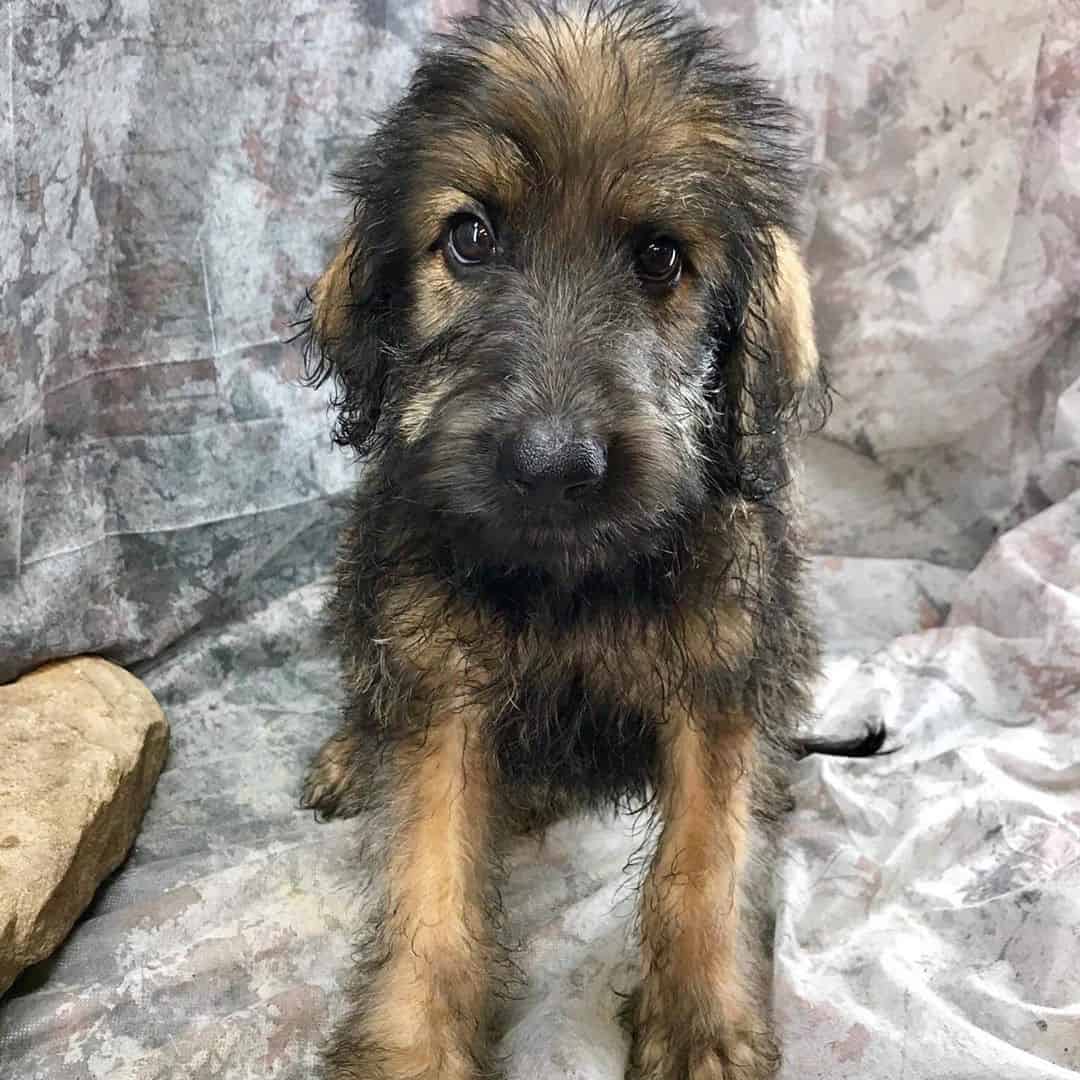
The Shepadoodle’s weight can vary depending on which parent dominates the gene pool. Typically he will weigh within 50 to 90 pounds but can sometimes go as high as 125 pounds.
Temperament/Behavior
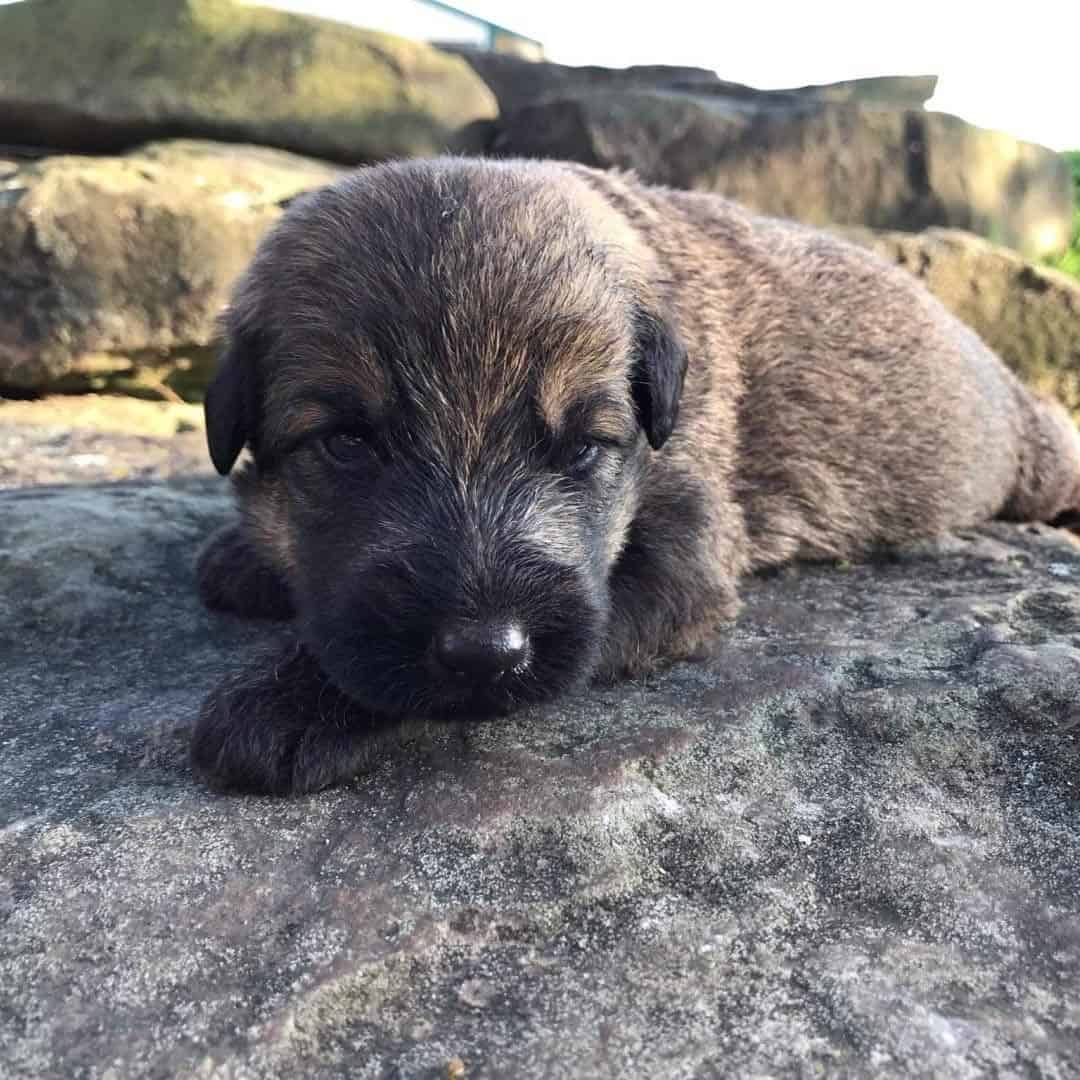
Boasting a relaxed basic nature, the Shepadoodle is loyal to its humans, so expect strong attachment. This is a well-mannered, warm and loving breed that is great with children and other pets (they love cats!). They are highly family-oriented and while they need their outdoor space to work off boundless energy, they enjoy indoor time with their “pack”. Taking a cue from their German Shepherd lineage, they are also keen to please their leader and will respond well to instructions.
Common Health Problems
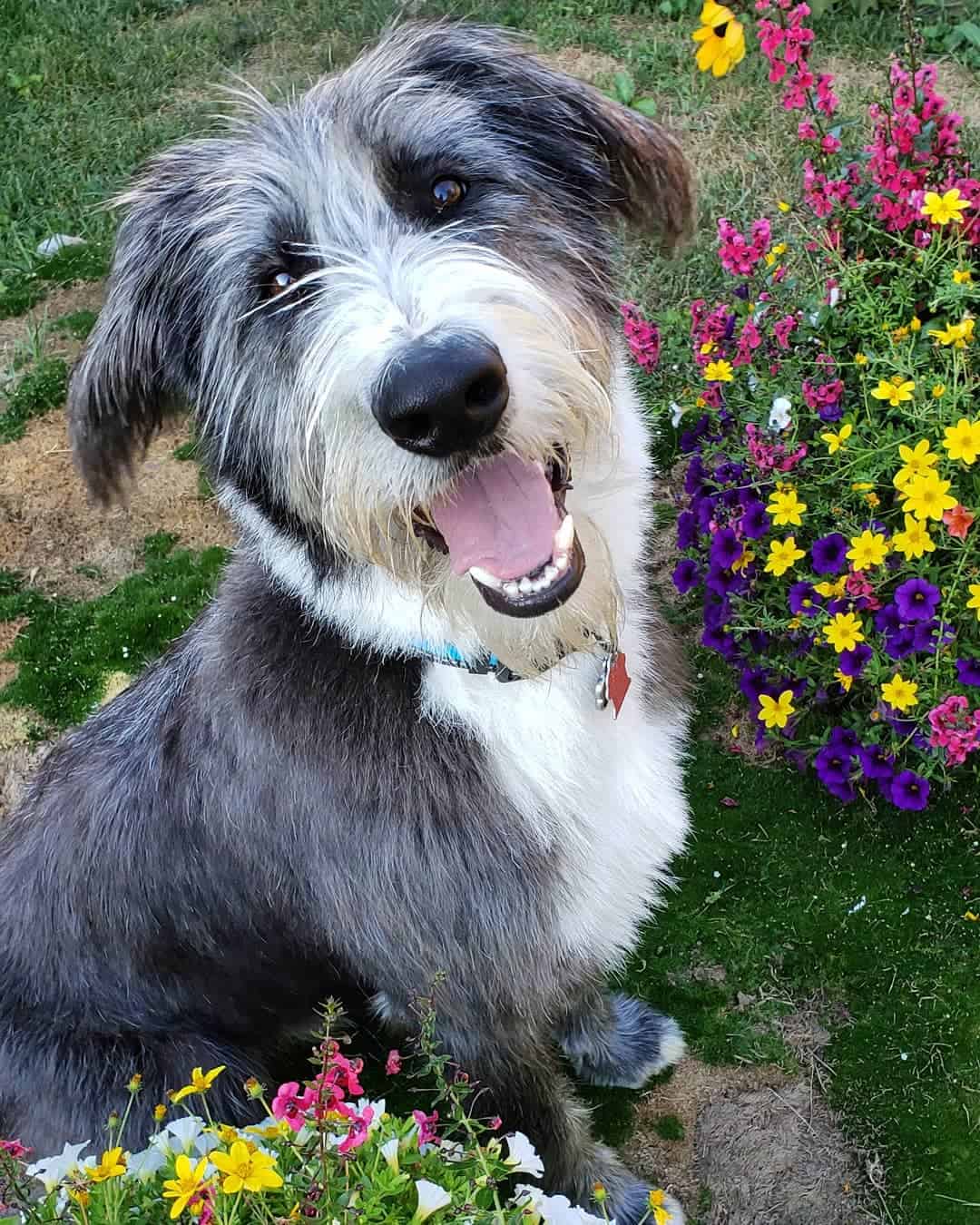
While typically a healthy breed, Shepadoodles can be prone to the same health issues as their parents, meaning hip dysplasia and Von Willebrand’s disorder (a blood disease that prohibits easy clotting) as well as prone to ticks and flea bites if their long hair is not properly groomed.
Life Expectancy
The life expectancy of a Shephadoodle is 12 to 14 years.
Exercise Requirements
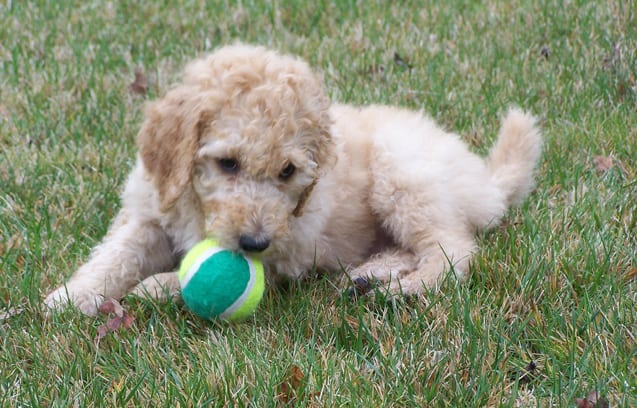
The GSD is a working dog with a stronger drive than the Poodle; exercise is important for their overall confidence. This is a strong, active dog that requires a great deal of daily exercise – whether walking, jogging, playing fetch or employing agility routines. This breed needs to migrate – which means walk a lot – so don’t assume just because he’s done his “business” he is ready to return home. He needs to be walked until he is calm and sated. Because of this – and a propensity to obesity if inactive – long walks are necessary for his physical and mental health along with a regular visit to the local dog park for socialization and active play. Ensuring he has plenty of toys that can be incorporated into his human interactions and exercise routines will keep him engaged and curious.
Boasting a relaxed basic nature, the Shepadoodle is loyal to its humans, so expect strong attachment.
AKC
The Shepadoodle is a hybrid and for that reason is not recognized by the American Kennel Club (AKC) but it is registered with the American Canines Hybrid Club (ACHC).
Coat
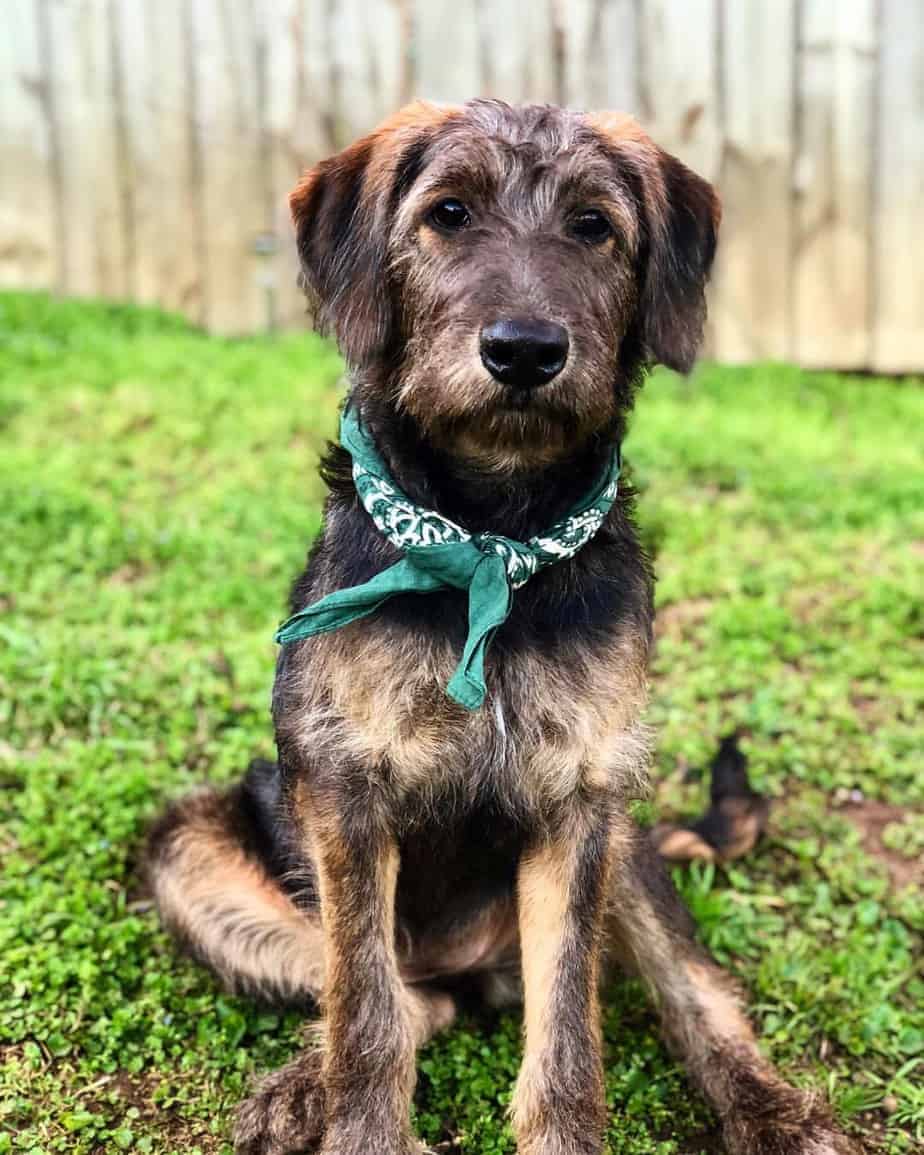
While Shepadoodles can closely resemble their German Shepherd lineage in terms of colour and coarser, denser hair, they do not shed like a Shepherd because of the Poodle influence. Depending on the F1 or F1B generation: the F1 coat is wavier with a very light shed, while the F1B coat is curlier, less dander produced and virtually non-shed. Their coats may appear smooth, wavy, or curly depending on which parent they lean towards and coloring may be heavily reminiscent of the Shepherd, with bronze, cream, and black patterns. They do require daily brushing in order to avoid matting and tangling as well as periodic bathing. Give your Shepadoodle a short buzz cut in summer so his skin can breathe. It’s important to note that dry skin can occur during the winter in cold environments – a daily dose of cod liver oil helps to eliminate this problem.
Puppies
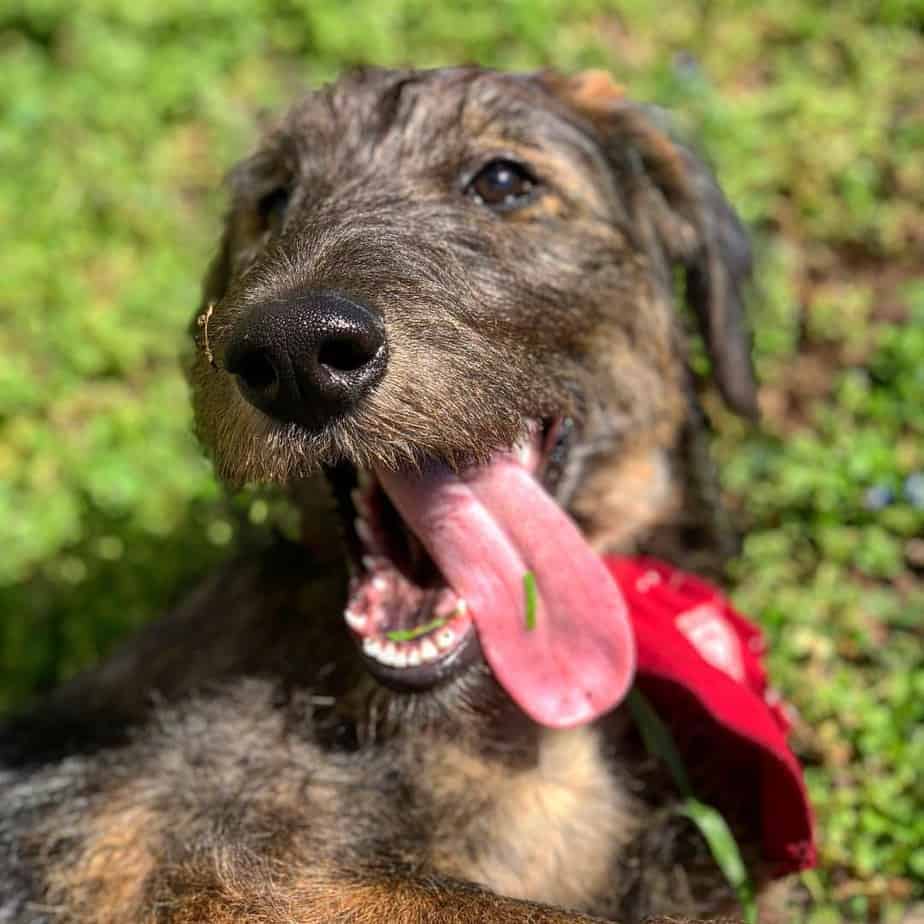
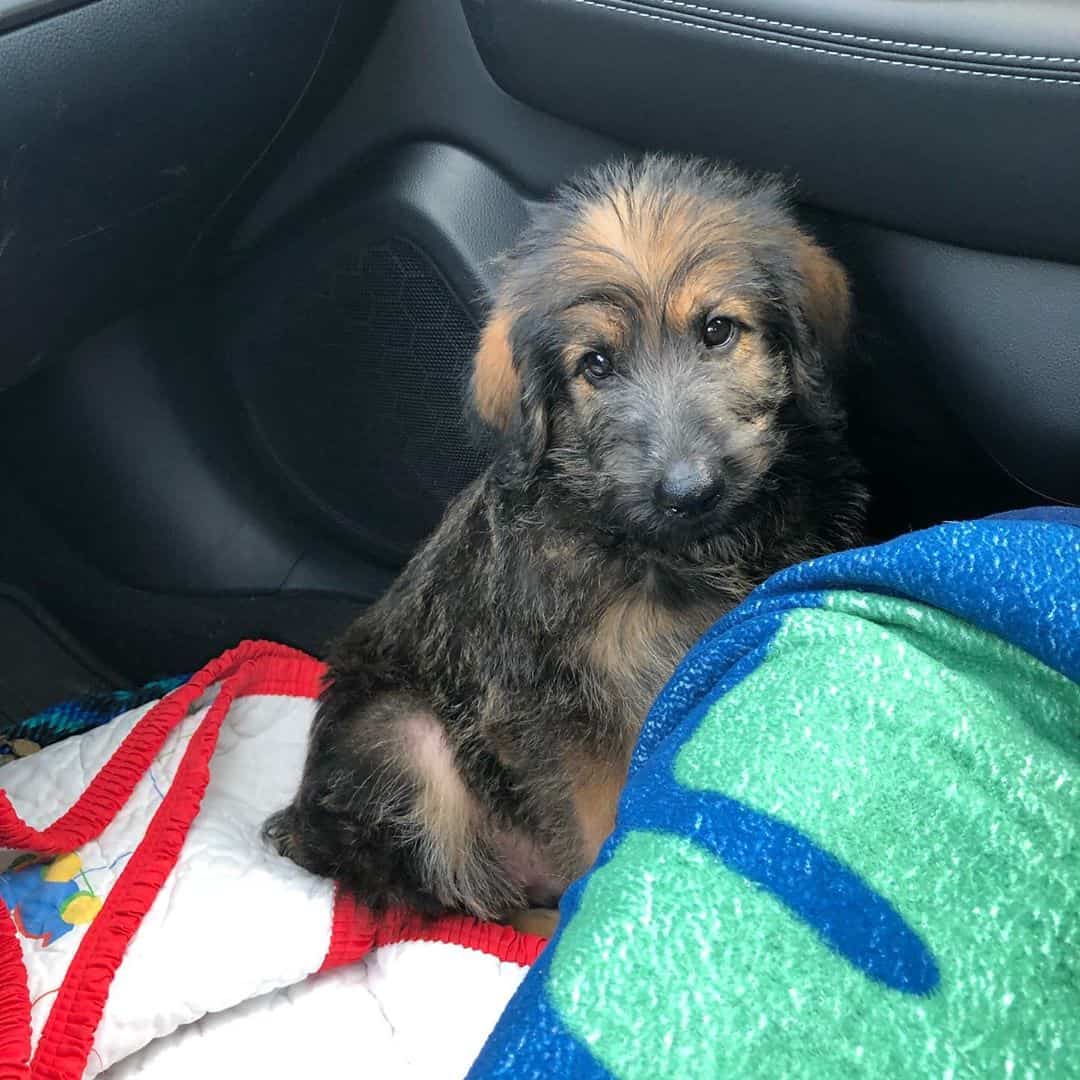
It’s important you have done your research before settling on a larger breed dog. Shepadoodle pups are adorable – and deceptively small – but grow quickly and require time and dedication when it comes to training, exercise and socialization. They are also family-oriented so will want to spend time with you indoors, not kenneled outdoors. If you are not prepared to put in the time, look for another breed that may be a better fit for your circumstances.